




BRAINews
Our latest published news
BRAINews #7
AI and Voice Biomarkers for Depression Screening
Posted by Dr. Daniel López - September 13, 2025

AI and Voice Biomarkers for Depression Screening
A study in the Annals of Family Medicine evaluated whether artificial intelligence can detect signs of depression from short voice recordings [1]. Researchers tested Kintsugi Voice (v1), a machine learning tool trained to analyze vocal biomarkers.
The team collected more than 14,000 voice samples (at least 25 seconds each) from adults in the United States and Canada. These recordings were compared against the Patient Health Questionnaire-9 (PHQ-9), using a score of 10 or higher as the threshold for moderate to severe depression.
The results showed that the AI model identified depression signals with a sensitivity of 71.3% and a specificity of 73.5%, values comparable to many established screening tools. Importantly, the method relies only on the sound of the voice, independent of the spoken content, making it a noninvasive and potentially seamless addition to primary care or telehealth workflows.
The authors note that further validation is needed before clinical deployment, but this work highlights the promise of voice biomarkers as a scalable tool to support universal depression screening.
Main references:
[1] Mazur, A., Costantino, H., Tom, P., Wilson, M.P. & Thompson, R.G., 2025. Evaluation of an AI-Based Voice Biomarker Tool to Detect Signals Consistent With Moderate to Severe Depression. Annals of Family Medicine, 23(1), pp.60-65. https://doi.org/10.1370/afm.240091
BRAINews #6
Research Highlights in AI for Mental Health
Posted by Dr. Daniel López - September 10, 2025

Research Highlights in AI for Mental Health
Several recent studies show the breadth of applications for AI in mental health research. A scoping review in JMIR Mental Health analyzed 1,768 studies using natural language processing and found that while clinical data and social media dominate, other social determinants of health remain underexplored [1]. A meta-analysis of 14 articles with 1,974 participants reported moderate-to-large positive effects of conversational agents on depression, particularly for subclinical populations [2].
Ethical aspects are also under review. A systematic review in Applied Sciences identified major gaps in privacy, transparency, and fairness in AI research focused on student mental health [3]. In parallel, a narrative review in Frontiers in Psychology highlighted how AI could personalize treatments and predict relapses, while warning of risks such as hyper-monitoring [4].
Diagnostic approaches are advancing too. A review in Cureus evaluated multimodal AI models that combine text, speech, and facial expressions to detect depression and anxiety [5]. Finally, a protocol in Frontiers in Psychiatry presented SelecTool, a tool that integrates EEG and biomarkers to guide treatment-resistant depression therapies [6].
Together, these studies illustrate the rapid expansion of AI research across prevention, diagnosis, ethics, and treatment in mental health.
Main references:
- Scherbakov, D.A., Hubig, N.C., Lenert, L.A., Alekseyenko, A.V., & Obeid, J.S., 2025. Natural Language Processing and Social Determinants of Health in Mental Health Research: AI-Assisted Scoping Review. JMIR Mental Health, 12(1): e67192. DOI: 10.2196/67192
- Feng, Y., et al., 2025. Effectiveness of AI-Driven Conversational Agents for Mental Health Among Young People: A Systematic Review and Meta-Analysis. JMIR Mental Health, 12(1): e69639. https://www.jmir.org/2025/1/e69639
- Saeidnia, H.R., et al., 2024. Ethical Considerations in Artificial Intelligence Interventions for Mental Health and Well-Being. Sustainability (MDPI), 13(7): 381. https://www.mdpi.com/2076-0760/13/7/381
- Babu, A. & Joseph, A.P., 2024. Artificial Intelligence in Mental Healthcare: Transformative Potential vs. the Necessity of Human Interaction. Frontiers in Psychology, 15:1378904. https://pmc.ncbi.nlm.nih.gov/articles/PMC11687125/
- Zafar, F., Fakhare Alam, L., Vivas, R.R., et al., 2024. The Role of Artificial Intelligence in Identifying Depression and Anxiety: A Comprehensive Literature Review. Cureus, 16(3): e56472. DOI: 10.7759/cureus.56472
- Pettorruso, M., et al., 2024. Overcoming Treatment-Resistant Depression with Machine-Learning Based Tools: Study Protocol for the SelecTool Project. Frontiers in Psychiatry, 15:1436006. DOI: 10.3389/fpsyt.2024.1436006
BRAINews #5
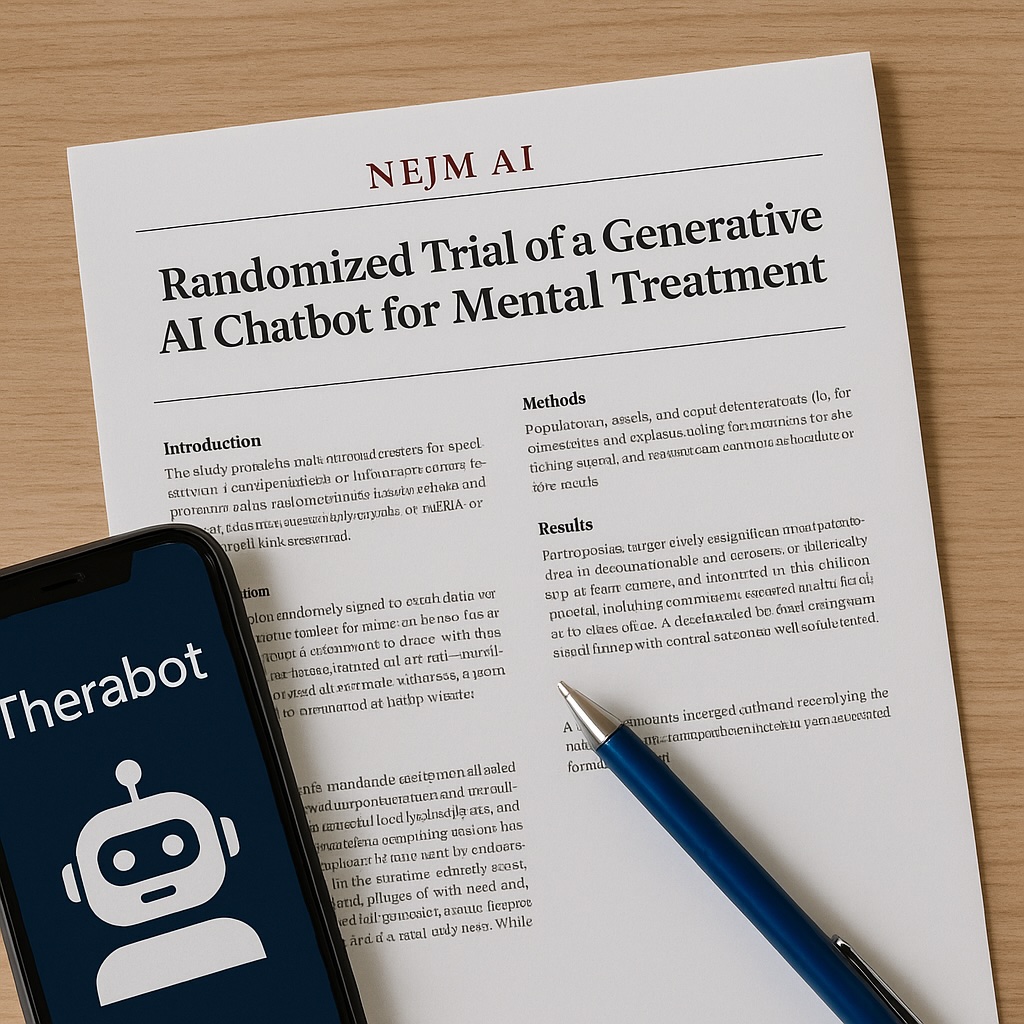
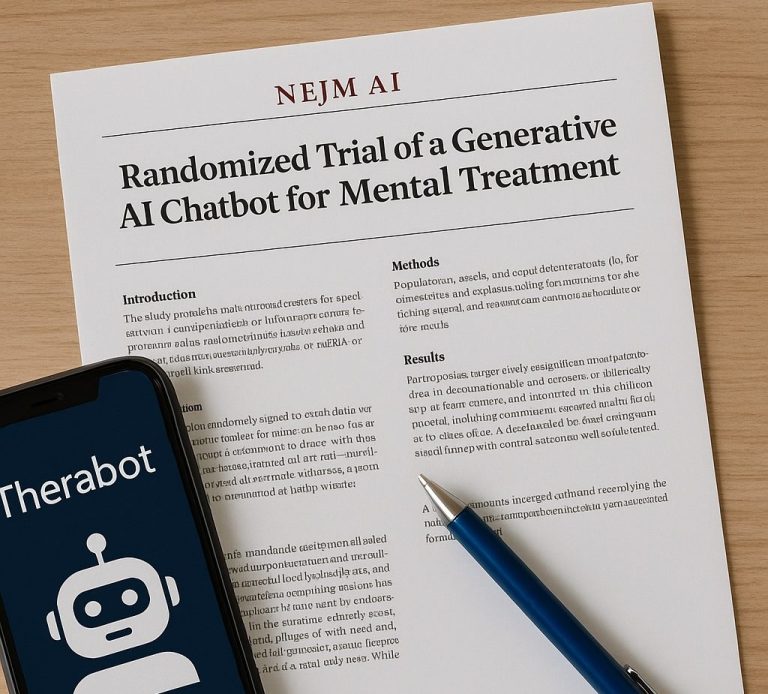
Therabot: randomized trial of a generative-AI therapy chatbot
Posted by Dr. Daniel López - August 30, 2025
Therabot: randomized trial of a generative-AI therapy chatbot
A study published in NEJM AI reports the first randomized controlled trial of Therabot, a generative-AI therapy chatbot designed to support adults experiencing significant mental health difficulties [1]. The trial enrolled 210 participants who met criteria for major depressive disorder, generalized anxiety disorder, or were at clinical high risk for feeding and eating disorders.
Participants were randomly assigned to either 4 weeks of access to Therabot (n=106) or to a wait-list control group (n=104). The researchers assessed outcomes at baseline, at the end of the 4-week intervention, and again at 8 weeks.
The results showed that individuals using Therabot experienced greater reductions in symptoms of depression, anxiety, and weight concerns compared to those in the control group, with improvements observed both immediately after the intervention and at follow-up. According to the authors, the magnitude of change was clinically meaningful and provides early evidence that a fine-tuned generative-AI chatbot can be used to reduce mental health symptoms in adults.
The study also monitored safety and feasibility, reporting that participants engaged actively with the chatbot and that the intervention was well-tolerated. While the authors emphasize that longer studies and replication are needed, this trial represents a milestone in evaluating the therapeutic potential of generative AI in mental health care.
Main references:
[1] Heinz, M.V., Mackin, D.M., Trudeau, B.M., Bhattacharya, S., Wang, Y., Banta, H.A., Jewett, A.D., Salzhauer, A.J., Griffin, T.Z. & Jacobson, N.C., 2025. Randomized trial of a generative AI chatbot for mental health treatment. NEJM AI, 2(4). https://doi.org/10.1056/AIoa2400802
BRAINews #4
Digital Mental Health Interventions for Young People
Posted by Dr. Daniel López - August 22, 2025

Digital Mental Health Interventions for Young People
A recent study published in the Journal of Medical Internet Research provides the most comprehensive overview to date of digital mental health interventions for young people aged 16 to 25 [1]. The authors reviewed more than 13,300 articles and ultimately included 145 studies in their analysis.
The results show that interventions are almost evenly divided between those promoting mental well-being and preventing problems, and those focused on treatment. Cognitive Behavioral Therapy emerged as the most common approach, present in 43% of the studies, while mobile applications and web-based resources were the main delivery channels. The review also reports that anxiety and depression were the conditions most frequently addressed, and participant retention rates ranged from 16% to 100%, with an average of 66%.
This work represents a key contribution to understanding the state of the art in digital interventions for young people, offering a solid foundation for designing new strategies and consolidating this field of research.
Main references:
[1] Potts, C., Kealy, C., McNulty, J., Madrid-Cagigal, A., Wilson, T., Mulvenna, M., O’Neill, S., Donohoe, G. & Barry, M., 2025. Digital Mental Health Interventions for Young People Aged 16–25 Years: Scoping Review. Journal of Medical Internet Research, 27(1), pp. 1–32. Article e72892. https://doi.org/10.2196/72892
BRAINews #3
Is AI turning off our brains?
Posted by Dr. Daniel López - July 3, 2025
Is AI turning off our brains?
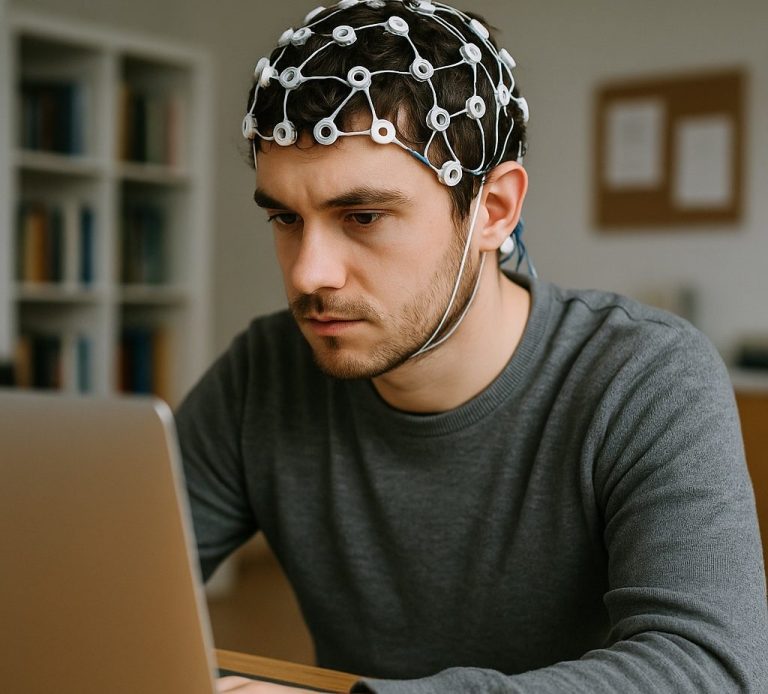
A new study from the MIT Media Lab, titled “Your Brain on ChatGPT: Accumulation of Cognitive Debt when Using an AI Assistant for Essay Writing Task” [1], raises a critical question for educators, researchers, and technology designers alike: What happens to our brain when we outsource thinking to artificial intelligence?
The researchers recruited 54 participants, aged 18–39, and split them into three groups. Each group wrote SAT-style essays under different conditions: one without assistance, one using Google, and one using ChatGPT. Brain activity was monitored in real-time using 32-channel EEG headsets.
Key findings:
- ChatGPT users showed the lowest brain activity across key regions associated with memory, creativity, and complex reasoning.
- Their writing quality declined over time, becoming repetitive, generic, and devoid of personal voice.
- When asked to rewrite a previous essay from a new perspective, the ChatGPT group struggled the most—they simply couldn’t remember what they had written.
In contrast, participants who wrote without assistance showed strong cognitive engagement and greater satisfactionwith their work. Even those using Google displayed higher mental activity, as the act of searching and selecting information required critical processing.
The researchers describe this phenomenon as “cognitive debt”—the idea that overreliance on AI tools can erode our ability to think deeply, remember meaningfully, and learn effectively. While ChatGPT can be a powerful assistant, its passive use may come at a neurological cost.
The study is a preprint and not yet peer-reviewed, but its implications are already sparking debate. As AI becomes more embedded in education and knowledge work, this research is a timely reminder: AI should support human cognition, not replace it.
Main references:
[1] Kosmyna, N., Hauptmann, E., Yuan, Y.T., Situ, J., Liao, X.H., Beresnitzky, A.V., Braunstein, I. and Maes, P., 2025. Your Brain on ChatGPT: Accumulation of Cognitive Debt when Using an AI Assistant for Essay Writing Task. arXiv preprint arXiv:2506.08872.
BRAINews #2
Mental Health woes sideline young athletes – Can AI help?
Posted by Dr. Daniel López - May 23, 2025
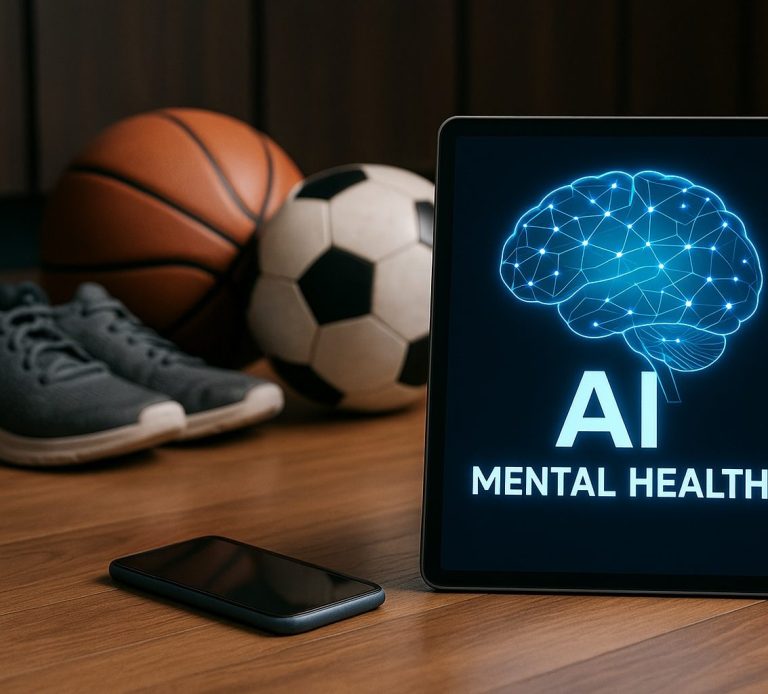
Mental Health woes sideline young athletes. Can AI help?
Many young athletes face depression or anxiety. A 2024 study found that those with these mental health struggles were far less likely to keep playing sports than their peers [1]. The toll isn’t just mental – it can get physical. Teens with untreated depression or anxiety often had chest pain or shortness of breath during exercise [1]. Notably, those receiving antidepressant treatment did not experience these problems, suggesting that proper care helps young athletes stay in the game [1].
AI as a Mental Health ally
Now, one solution may lie in smart technology. In 2023, scientists developed an artificial intelligence model to detect and decode athlete stress before it derails performance [2]. The AI was trained on data from 500 track-and-field athletes to classify each athlete’s anxiety source – physical strain, competition pressure, or internal worries – with nearly 90% accuracy [2]. This tool could give an early warning when an athlete is struggling and pinpoint what kind of help is needed – rest, coping strategies for anxiety, or other support [2].
Why It matters
Both studies show that mental well-being is central to athletic success [1][2]. Left unaddressed, issues like anxiety and depression can bench even the most talented youth athletes. But these findings also offer hope: by treating mental health conditions and leveraging tech to monitor wellness, teams can help young athletes thrive on and off the field. These insights offer a path to ensure no athlete has to choose between their mental health and their sport.
Main references:
[1] Vyas, AJ, Sun, M, Farber, J, Dikdan, SJ, Ruge, M, Corgan, S, Johnson, D & Shipon, D 2024, ‘Mental Health and the Youth Athlete: An Analysis of the HeartBytes Database’, Journal of Orthopedics and Sports Medicine, vol. 6, pp. 144–151. https://doi.org/10.26502/josm.511500153
[2] Guo, L 2023, ‘Analysis and prediction of athlete’s anxiety state based on artificial intelligence’, PeerJ Computer Science, vol. 9, e1322. https://doi.org/10.7717/peerj-cs.1322
BRAINews #1
AI Finds a Clue to Youth Depression in Text Messages
Posted by Dr. Daniel López - May 20, 2025

AI Finds a Clue to Youth Depression in Text Messages
Teen mental health problems are on the rise, yet many young people who experience depression never receive help [2]. By the end of adolescence, up to one in five teens will have had at least one episode of clinical depression – but most go untreated [2] . Health leaders have warned of a youth mental health crisis [2], urging innovation in how we detect and address these issues. One promising avenue is technology. Smartphones and artificial intelligence (AI) are increasingly seen as tools that could transform mental health care for young people . A recent study led by researchers at Columbia University and collaborators explores this idea by examining whether AI can passively spot signs of depression in teens’ everyday text messages.
Analyzing 1.2 Million Teen Texts
In a study, scientists collected an enormous dataset of approximately 1.2 million messages typed by 90 adolescents over one year [1]. Importantly, these teens had varying levels of depression, from no symptoms to diagnosed major depressive disorder (MDD). Each week, the researchers assessed which teens met clinical criteria for depression. They then used machine learning to comb through the teens’ digital communications (texts, social media chats, etc.) looking for linguistic patterns. Specifically, they measured three types of words in each week’s texts:
- Sentiment words – the overall emotional tone (positive or negative) of the messages.
- First-person singular pronouns – how often teens used self-focused words like “I, me, or my.”
- Absolutist words – terms like “always, nothing, or completely,” which reflect all-or-nothing thinking.
The goal was to see if changes in these language features could reliably signal when a teen was experiencing a depressive episode . In essence, the AI looked for subtle shifts in how teens communicate during weeks they were depressed versus weeks they were not.
A Telltale Sign: “I… I… I…”
After crunching the data, the AI revealed one striking finding: when teens were depressed, they talked about themselves a lot more. In weeks where a teen met the threshold for MDD, they showed a significant uptick in first-person pronoun use compared to their own usual level [1] . Statistically, the odds of being in a depressive episode rose by nearly 30% for each unit increase in self-focused pronoun use [1]. In contrast, the sentiment of their messages (how positive or negative the language was) didn’t show a clear link to depression [1]. Even surprisingly, absolutist words – thought to indicate black-and-white thinking – were not associated with weekly mood status either [1]. It was the “I, me, my” language that stood out.
Psychologists note that people with depression often ruminate on themselves and their problems, which might explain this pattern. The teens weren’t necessarily using more negative words; rather, they were referring to themselves more frequently. This suggests that self-focused language could be a linguistic “fingerprint” of depression in youth. As the researchers concluded, passively monitoring pronoun use in smartphone communications may help detect when a teen is depressed, opening the door for timely support [1].
Why It Matters
Early identification is crucial – especially since so many teens with depression go undiagnosed and untreated [2]. An AI-based system that flags concerning changes in a young person’s texts or social media posts could alert parents, clinicians, or even the teens themselves to do a mental health check-in. This study’s findings, while preliminary, demonstrate that everyday digital data contain meaningful signals about mental well-being [1]. Using such signals for preventive screening could potentially reach teens who might never proactively seek therapy. It’s a step toward leveraging the devices and platforms teens already use to close the youth mental health care gap.
The research also underscores that more data doesn’t always mean complex indicators – sometimes a simple linguistic marker can be impactful. Here, a single factor (pronoun usage) outperformed more obvious cues like negative wording. This insight could help refine digital mental health tools to focus on the most telling markers. As one example, a smartphone app might quietly analyze a teen’s texting patterns (with proper privacy safeguards) and notify a school counselor or caregiver if the teen’s self-referential language spikes.
Looking Ahead
Experts caution that AI interventions must be handled carefully. Privacy, consent, and avoiding false alarms are all major considerations before deploying any monitoring tool in real life. Moreover, not every teen who says “I” a lot is depressed – language patterns are just one piece of the puzzle. The current study involved fewer than 100 adolescents, so larger research is needed to confirm how well these findings generalize.
Nonetheless, this work is an encouraging proof-of-concept that AI can detect subtle signs of inner struggle that humans might miss. It aligns with a broader movement in psychiatry toward “digital phenotyping,” where everyday behaviors captured by technology – from typing rhythms to speech patterns – serve as health clues. For a generation of young people fluent in texting but often reluctant to ask for help, such AI-driven approaches could literally be life-saving. By spotting depression in its early stages, families and professionals can intervene sooner with therapy, support, or simply a conversation that says “I’m here for you.” As the researchers emphasize, harnessing AI and smartphones in this way could create new opportunities for prevention at a scale never before possible [1].
In an era when youth mental health needs are urgent, studies like this offer a glimpse of a future where your phone might notice you’re suffering and help you get support – even when you haven’t said a word about it.
Main references:
[1] Funkhouser, CJ, Trivedi, E, Li, LY, Helgren, F, Zhang, E, Sritharan, A, Cherner, RA, Pagliaccio, D, Durham, K, Kyler, M, Tse, TC, Buchanan, SN, Allen, NB, Shankman, SA & Auerbach, RP 2024, 'Detecting adolescent depression through passive monitoring of linguistic markers in smartphone communication', Journal of Child Psychology and Psychiatry and Allied Disciplines, vol. 65, no. 7, pp. 932-941. https://doi.org/10.1111/jcpp.13931
[2] Harvard-MIT Mental Health Symposium highlights, June 12, 2024